
Apex Flood Station
The Apex Flood Station is a fully customizable flood monitoring and warning station built for large counties, cities, flood districts, and transportation agencies managing complex, high-consequence networks where incomplete data or a missed alert is not an option.
- Fully customizable station supports redundant sensors, satellite communications, and barrier gates.
- ALERT2 protocol enables reliable, scalable data transmission across complex flood warning networks.
- DOT-certified design meets the demands of high-volume roadways and mission-critical infrastructure.

- What to know
- Flexible configurations
- Driver safety
- ALERT2 and telemetry
- AEM Elements 360
For deployments where accuracy, redundancy, and reliability aren't optional
Large flood warning networks carry real operational weight. A station that goes dark during an event, or a network that can’t scale to cover every critical crossing, creates gaps that cost lives. The Apex Flood Station is designed for agencies and organizations that manage more sites, more risk, and less tolerance for failure.
From large urban flood districts to county-wide transportation networks, the Apex delivers the customization, redundancy, and communications depth that complex deployments require.

Built for complexity
Every system is configured to the specific demands of the site and network, with sensor selection, communications protocols, and warning infrastructure chosen to match the deployment.

Redundancy by design
Multiple sensors at a single site ensure that data keeps flowing even if one fails. This redundancy is critical for high-consequence locations where a missed reading can have dangerous consequences.

ALERT2 network ready
ALERT2 protocol is the standard for large hydrologic monitoring and flood warning networks. ALERT2 enables scalable, interference-resistant data transmission and integrates with compatible stations, software, and agency infrastructure.

Flexible telemetry
Connectivity in remote locations is handled via satellite communications options backed by redundant cellular. Data keeps moving when terrestrial networks are disrupted or unreachable.

Advanced driver warning
Apex Flood Station supports the full range of on-site driver warnings, from flashing beacons and signs to automatic barrier gates that automatically close a road when water is detected.

Configure each site for the conditions it will actually face
The Apex Flood Station supports a broader sensor suite than any other station in the portfolio. Water level, rain gauge, multi-weather, and camera options can be combined at a single site, with multiple units of the same type deployed for redundancy.
Sensor options include:
- Water level. Continuous monitoring of stream and road flood levels using submersible pressure transducers or radar technology, with high-resolution readings suited to complex hydrology.
- Rain gauge. Tipping-bucket gauges capture localized precipitation data at each site, essential for understanding rainfall distribution across a large network.
- Multi-weather. All-in-one sensor packages cover wind speed, wind direction, temperature, humidity, and barometric pressure, supporting a complete meteorological picture alongside flood data.
- Camera. Integrated camera option provides real-time visual confirmation of road and stream conditions, available remotely through AEM Elements 360.
The highest level of automated motorist protection on flooded roads
The Apex is the only station in the portfolio that supports automatic barrier gates, which physically restrict vehicle access to a flooded roadway without requiring personnel on site. When water reaches a specific threshold, gates close. When conditions clear, they reopen. The system operates autonomously or under remote operator control.
Warning infrastructure options include:
- Flashing beacons and signs. Activate automatically when water levels reach defined thresholds, alerting approaching motorists to conditions ahead.
- Barrier gates. Physically block the roadway at the point of danger. Remotely triggerable from AEM Elements 360 and designed to continue operating during connectivity interruptions.
All warning stations can be remotely triggered or overridden from AEM Elements 360, giving emergency managers direct control over road closure status without deploying personnel. Two-way communications ensure that gate position and beacon status are always confirmed back to the software.
The Apex Flood Station meets DOT-certified design standards, making it suitable for deployment on principal arterials, state highways, and high-volume roadways where regulatory compliance is required.

Reliable data transmission across networks of any size
Large flood warning networks depend on consistent, timely data from every station in the field. The Apex supports ALERT2 over both VHF radio and IP, the modern standard for hydrologic monitoring networks, developed as the successor to the original ALERT protocol by the National Hydrologic Warning Council.
ALERT2 uses Time Division Multiple Access (TDMA) to assign each transmitter a dedicated time slot, eliminating data collisions that occur when multiple stations transmit simultaneously on the same frequency. For large networks with dozens or hundreds of stations, TDMA is the difference between reliable data delivery and chronic data loss.
Communications capabilities include:
- ALERT2 VHF radio. Long-range, encrypted radio transmission for field-to-base data delivery across wide geographic areas, without reliance on cellular infrastructure.
- Cellular. Primary or redundant cellular connection for real-time data updates and remote access.
- Satellite. GOES, Iridium, and Inmarsat satellite options maintain data transmission in remote areas or when terrestrial networks are disrupted during major events.
- Local data logging. On-station storage captures all readings locally, so data is preserved even during extended communication outages and can be retrieved after connectivity is restored.
Two-way communications across all channels allow operators to remotely update station configurations, trigger warning systems, and confirm equipment status without site visits. AEM Elements 360 TDMA Manager supports full network visualization and design, helping operators manage capacity, track latency, and plan for growth.

One platform for monitoring, alerting, and controlling your entire flood network
Every Apex Flood Station feeds data into AEM Elements 360, the decision support application that gives emergency managers and operations teams a centralized view of conditions across their entire network in real time. Rainfall totals, stage readings, gate positions, beacon status, and camera feeds all appear in one place.
Key capabilities for Apex deployments include:
- Live network monitoring. Real-time dashboards display water level, rainfall, and weather data from all stations, with configurable map views and charts tailored to your operational priorities.
- Threshold-based alerting. Automated alerts notify operators and field teams the moment any station reaches a defined threshold, with delivery via email, SMS, or app notification.
- Remote system control. Trigger barrier gates, activate beacons, and update station configurations directly from Elements 360 without dispatching personnel to the field.
- TDMA network management. AEM Elements 360 TDMA Manager supports visual design and management of ALERT2 networks, tracking capacity, latency, and potential conflicts across all connected stations.
- Public data sharing. Agencies can publish real-time flood conditions to a public-facing website through Elements 360, improving community awareness and supporting emergency communications during active events.
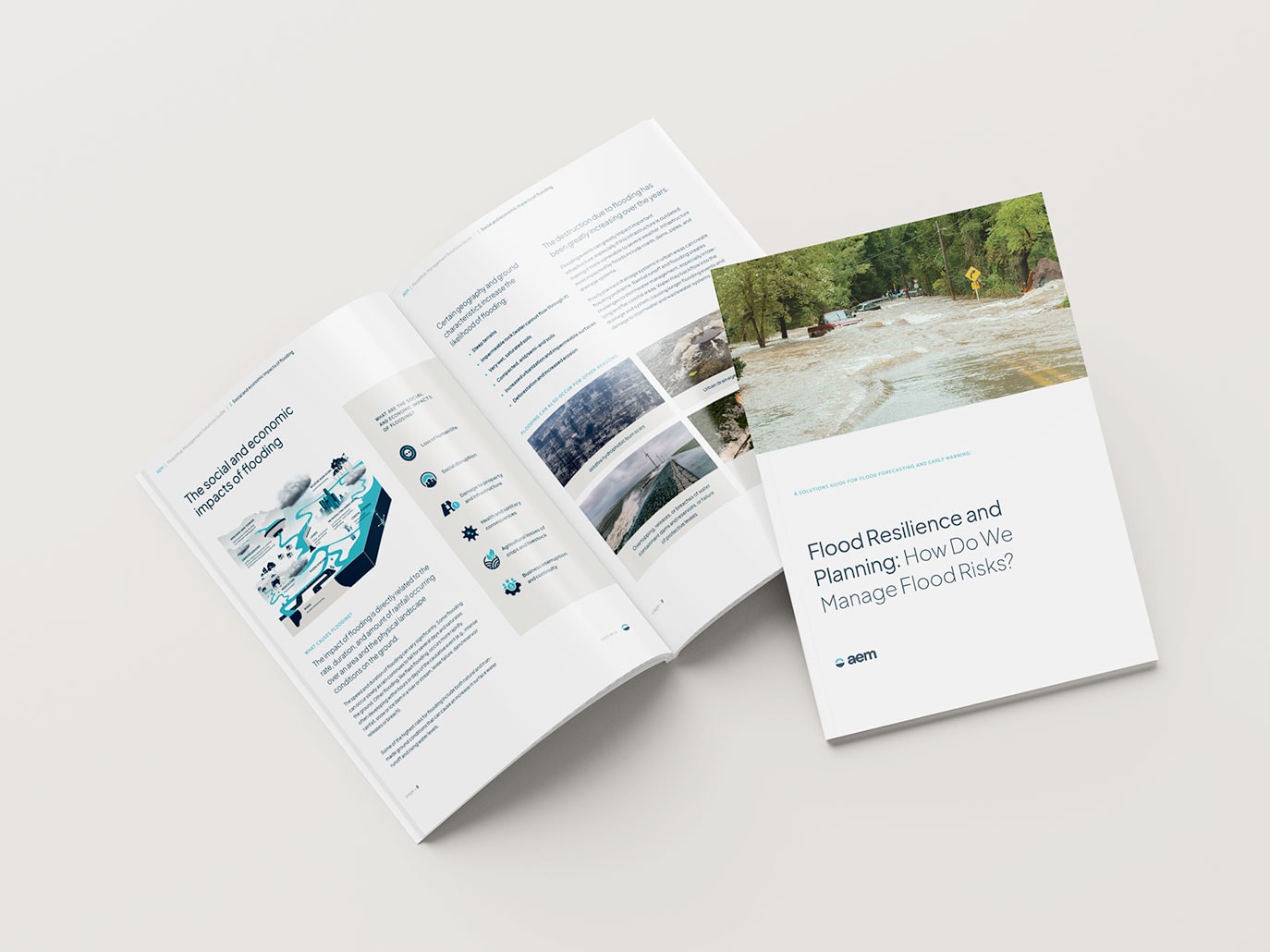
Find the right flood warning system for your community
Not every flood deployment is the same. This guide walks through the components, decision points, and station options that matter most when building or expanding a flood early warning system.



Frequently asked questions
Yes. ALERT2 is designed with a phased upgrade path in mind, so you don’t have to replace your entire network at once. StormLink ALERT2 products are compliant with the NHWC ALERT2 standard and interoperable with the broader ALERT2 ecosystem, making them a straightforward upgrade path for agencies transitioning from legacy ALERT systems.
Yes. AEM Elements 360 can receive data from and send commands to StormLink ALERT2 devices, giving operators a centralized view of network status and the ability to trigger remote actions from a single interface.
ALERT2 is the current-generation standard for real-time radio hydrologic warning. It improves on the original ALERT format with two-way communication, TDMA-based collision-free reporting, forward error correction, and full engineering values — all of which increase reliability across large multi-station networks.
ALERT2 is a radio-based telemetry protocol used in flood monitoring systems to transmit data from field sensors—such as rain gauges and water level sensors—to a central system in real time. It is designed for reliability in challenging conditions, helping ensure critical data can still be transmitted during severe weather or when other communication networks are disrupted.
GET IN TOUCH
Interested in learning more?
If you have questions about anything you see, fill out the form below. An AEM Weather Expert will reach out to you shortly.