
2025 U.S. Lightning Report
A deep dive into 2025 U.S. lightning activity powered by data from
AEM’s Earth Networks Total Lightning Network® (ENTLN), delivering more detections
with near-zero false alarms.

Highlights: The year in weather
+9.8%
Increase in lightning flashes over 2024

June 15
Most lightning-intense day of the year: 929,016 flashes

Kay County, OK
Highest concentration of lightning: 123.4 flashes/mile2

Texas
Biggest surge in lightning (1.3 million flashes above state average)

Utah
Biggest increase in thunderstorm activity: 189.6 hours above state average

10,642
Lightning flashes impacted the world’s busiest airport: Hartsfield-Jackson Atlanta International

Key insights
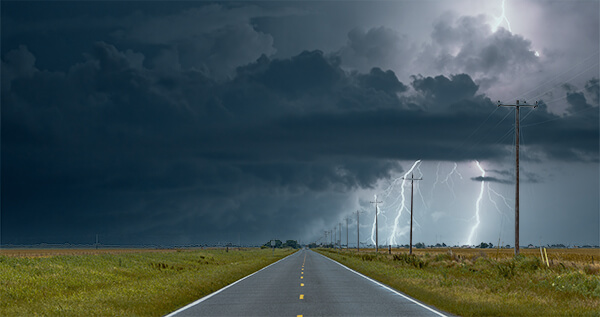
Oklahoma dethrones Florida as lightning hot spot
Oklahoma topped Florida to become the state with the highest concentration of lightning (73 flashes per mile2). The shift signals a broader surge in lightning activity across the Great Plains.
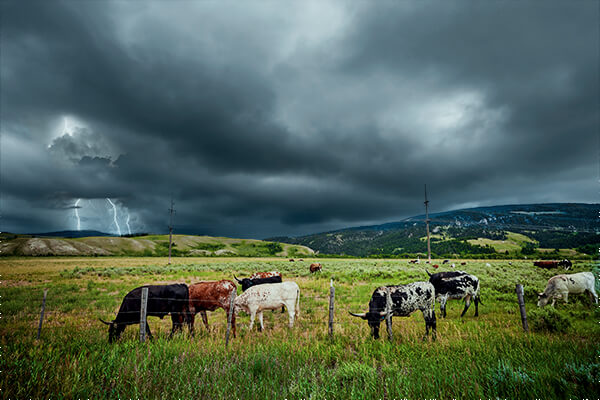
Texas is #1 in storm intensity
With 9,103 Dangerous Thunderstorm Alerts (DTAs), Texas had more than twice as many dangerous thunderstorms as the next highest state, which was Oklahoma. In fact, the Plains states accounted for half of the top 10 states with the most DTAs.
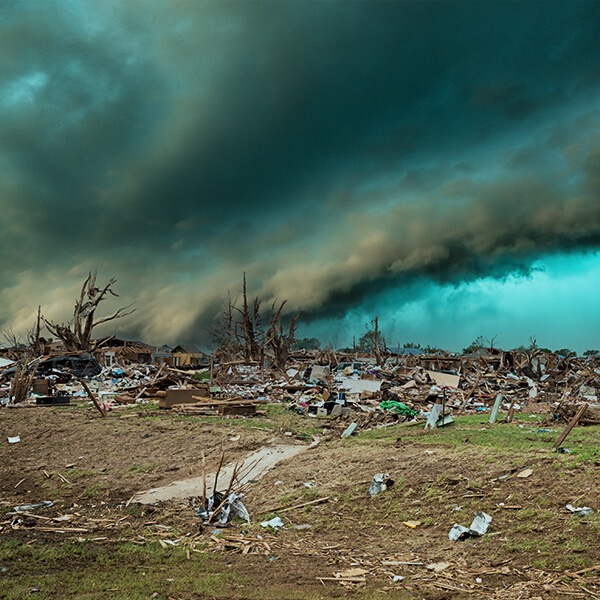
Peak lightning days bring billion-dollar disasters*
For at least three states, lightning activity peaked on days that coincided with billion-dollar disasters. Arkansas’ peak on April 2 lined up with a billion-dollar tornado outbreak, while Wisconsin’s peak on May 15 kicked off a billion-dollar tornado and storm event. Texas’ peak on May 26 occurred at the intersection of two separate billion-dollar disasters. *Data on billion-dollar disasters courtesy of Climate Central.
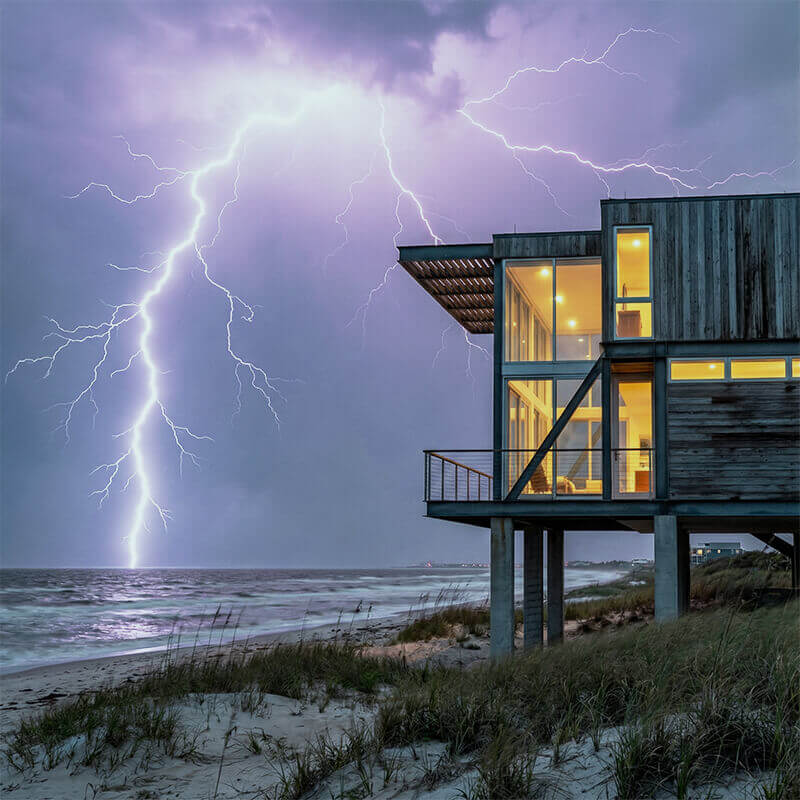
Southeast lightning was surprisingly sparse
The Southeast had a quieter storm year overall. While lightning totals were near normal in Florida, they were well below normal in Alabama, Georgia, and South Carolina. Alabama was the most extreme, ending the year with 405,000 fewer lightning flashes than average.
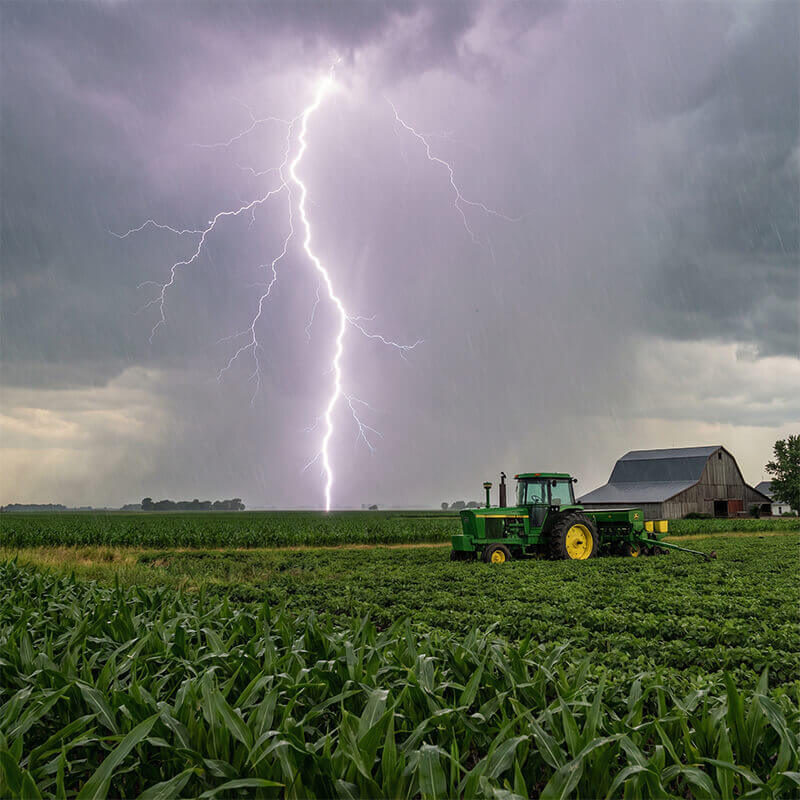
The Great Plains: More lightning despite fewer active hours
Although the Great Plains experienced fewer hours of stormy weather than normal, the six states that make up the region’s core still produced more than one-third of all U.S. lightning flashes (about 2.6 million above the region’s four-year average).
Featured sectors
- Airports
- Military Bases
- Stadiums
- Landmarks
Top 10 busiest airports
- Map
- Rankings


Did you know?

With 31,937 flashes in 2025, Orlando International had the highest lightning exposure among the nation’s busiest airports, a hefty operational burden for such a high-traffic hub.
*Based on analysis of the top 10 busiest airports in the U.S.Three of the most central air traffic hubs in the U.S. (Dallas–Fort Worth, Atlanta, and Chicago O’Hare) rank in the top five for lightning exposure, with only Florida airports seeing higher totals.
*Based on analysis of the top 10 busiest airports in the U.S.Eight of the ten busiest U.S. airports reached their peak lightning day during the height of the summer travel season, when delays matter most.
*Based on analysis of the top 10 busiest airports in the U.S.| Airport | Passengers Boarded | Total Lightning Flashes | Peak Flash Day | Peak Flashes |
|---|---|---|---|---|
| Hartsfield-Jackson Atlanta International | 52,511,308 | 10,642 | June 27, 2025 | 1,079 |
| Dallas-Fort Worth International | 42,351,282 | 17,754 | August 4, 2025 | 1,410 |
| Denver International | 40,013,445 | 6,039 | August 10, 2025 | 1,000 |
| Chicago O'Hare International | 38,575,654 | 10,322 | August 17, 2025 | 2,534 |
| Los Angeles International | 37,762,558 | 15 | November 21, 2025 | 7 |
| John F Kennedy International | 31,209,177 | 2,424 | June 19, 2025 | 760 |
| Charlotte-Douglas International | 28,523,298 | 7,006 | August 1, 2025 | 1,676 |
| Harry Reid International | 26,183,204 | 1,521 | June 3, 2025 | 428 |
| Orlando International | 27,859,642 | 31,868 | August 5, 2025 | 1,992 |
| Miami International | 26,591,472 | 28,173 | May 4, 2025 | 2,533 |
Top 10 most populous military bases
- Map
- Rankings
Did you know?

The country’s most populous military base (Fort Hood) was exposed to the second-highest amount of lightning (20,657 flashes) in 2025, placing added strain on an already-busy training environment.
*Based on analysis of the top 10 most populous military bases in the continental U.S.Camp Pendleton saw just 28 lightning flashes in 2025 — a stark contrast that highlights how widely lightning exposure varies across major U.S. military bases.
*Based on analysis of the top 10 most populous military bases in the continental U.S.Annual totals don’t tell the full story. Fort Benning logged just 8,443 flashes in 2025 but posted one of the highest peak-day counts of any major base (1,390).
*Based on analysis of the top 10 most populous military bases in the continental U.S.| Military Base | Estimated Population | Total Lightning Flashes | Peak Flash Day | Peak Flashes |
|---|---|---|---|---|
| Fort Hood | 635,000 | 20,657 | May 1, 2025 | 1,948 |
| Ft Bragg | 260,000 | 6,455 | June 25, 2025 | 866 |
| Joint Base Lewis-Mcchord | 250,000 | 37 | March 27, 2025 | 25 |
| Fort Campbell | 250,000 | 7,574 | July 7, 2025 | 767 |
| Fort Bliss | 90,000 | 22,179 | June 25, 2025 | 3,023 |
| Camp Pendleton | 70,000 | 28 | July 18, 2025 | 15 |
| Naval Station Norfolk | 233,000 | 97 | June 8, 2025 | 18 |
| Camp Lejeune | 120,000 | 9,465 | June 16, 2025 | 1,063 |
| Fort Carson | 19,200 | 6,913 | August 1, 2025 | 756 |
| Fort Benning | 120,000 | 8,443 | June 21, 2025 | 1,390 |
Top 10 outdoor stadiums with highest seating capacity
- Map
- Rankings
Did you know?

Bad news for SEC fans: the three stadiums with the highest lightning exposure in 2025 — Tiger Stadium, Kyle Field, and the Cotton Bowl Stadium— are key SEC venues.
Lightning exposure varied dramatically in 2025. Tiger Stadium in Louisiana was the most exposed with 19,346 flashes. Beaver Stadium in Pennsylvania was the least with just 4,396.
*Based on analysis of the top 10 outdoor stadiums with the greatest seating capacity.Neyland Stadium in Tennessee hit its peak lightning day on September 4 with 2,236 flashes—just two days before its second home game.
| Stadium | Capacity | Total Flashes | Peak Flash Day | Peak Flashes |
|---|---|---|---|---|
| Michigan Stadium | 107,601 | 7,657 | July 12, 2025 | 1,542 |
| Beaver Stadium | 106,572 | 4,396 | July 16, 2025 | 863 |
| Ohio Stadium | 102,780 | 8,534 | July 27, 2025 | 1,485 |
| Kyle Field | 102,733 | 19,213 | May 6, 2025 | 2,741 |
| Tiger Stadium | 102,321 | 19,338 | July 30, 2025 | 1,310 |
| Neyland Stadium | 101,915 | 8,716 | September 4, 2025 | 2,236 |
| Darrell K Royal Texas Memorial Stadium | 100,119 | 9,710 | May 27, 2025 | 1,698 |
| Bryant Denny Stadium | 100,077 | 12,728 | May 2, 2025 | 1,486 |
| Sanford Stadium | 93,033 | 8,871 | July 30, 2025 | 961 |
| Cotton Bowl Stadium | 92,100 | 17,304 | July 8, 2025 | 2,396 |
Top 10 most visited U.S. landmarks
- Map
- Rankings
Did you know?

50% of the most-visited U.S. landmarks reached their peak lightning day in summer, when visitor traffic is highest.
*Based on analysis of the top 10 most visited U.S. landmarks.Chicago’s Millennium Park was exposed to 11,238 flashes in 2025, the most of any top U.S. landmark.
*Based on analysis of the top 10 most visited U.S. landmarks.San Francisco stood out. Golden Gate Park and Fisherman’s Wharf experienced the lowest lightning exposure among top U.S. landmarks.
*Based on analysis of the top 10 most visited U.S. landmarks.| Landmark | Estimated Visitors | Total Lightning Flashes | Peak Flash Day | Peak Flashes |
|---|---|---|---|---|
| Times Square | 50 million | 4,367 | June 19, 2025 | 909 |
| Central Park | 42 million | 4,225 | June 19, 2025 | 916 |
| Las Vegas Strip | 40-42 million | 1,488 | June 3, 2025 | 403 |
| The National Mall | 25-32 million | 9,633 | July 27, 2025 | 1,240 |
| Millennium Park | 20-25 million | 11,223 | August 17, 2025 | 3,002 |
| Golden Gate Park | 24 million | 1 | September 25, 2025 | 1 |
| Balboa Park | 13-14 million | 57 | May 31, 2025 | 49 |
| Pike Place Market | 10-20 million | 86 | March 27, 2025 | 46 |
| Fisherman's Wharf | 12-12.5 million | 1 | September 25, 2025 | 1 |
| Venice Beach | 10 million | 19 | November 21, 2025 | 9 |
National metrics


State metrics
As the lightning capital of the United States, Florida continues to have the highest concentration of lightning activity in the U.S.
Nine of the top 10 states with the highest concentrations of lightning are situated in areas known for their lightning activity, including the Gulf Coast, the Southeast, and the Great Plains regions. The only state that is not from one of these three regions is Missouri, which dislodged South Carolina from the top 10 this year. More than two dozen counties across Missouri experienced above-average rainfall over the past year.
Total lightning flashes
Use the slider to explore how values change across the map, from lower levels (blue) to higher levels (red).
As the lightning capital of the U.S., seven of the top 10 counties with the highest concentration of lightning activity are in Florida. But the top county with the single-greatest density of lightning activity is St. Bernard Parish in Louisiana.
Besides Florida, the remaining three spots in the top 10 are occupied by three counties in Louisiana and Mississippi (all located along the Gulf Coast in the Mississippi Delta region). Last year’s top contender, Poquoson City, Virginia, disappeared completely from the top 10, which underscores the extreme concentration of lightning in the Florida and Gulf Coast counties.
Flashes Intensity Scale
Use the slider to explore how values change across the map, from lower levels (blue) to higher levels (red).
As the lightning capital of the U.S., five of the top 10 counties with the most thunder hours are in Florida. The remaining counties, however, are not from any of the lightning hotspots in the Gulf Coast or Southeast. They are from Hawaii, Wyoming, Nevada, and Arizona.
In keeping with the rest of Hawaii, Honolulu County’s thunder hours can be traced to the area’s large number of storms with mild lightning activity. The remaining counties are among the top 30 in land area, which illustrates how the size of larger areas can skew lightning counts in their favor, even when they have lower concentrations of lightning activity.
Flash density
Use the slider to explore how values change across the map, from lower levels (blue) to higher levels (red).
Dangerous Thunderstorm Alerts (DTAs) are AEM’s patented severe weather warnings. When the lightning flash rate of a thunderstorm cell exceeds a high enough threshold to indicate that it poses a material threat to life and property, a DTA is automatically issued. The number of DTAs issued in an area correlates closely with the number of high-intensity thunderstorms.
As one might expect, Texas leads the list because of its large land area. But the other states on this list also appear in the top ten for lightning flash density. In other words, the states with the highest concentrations of lightning also tend to have the largest numbers of intense thunderstorms.
Peak flashes
Use the slider to explore how values change across the map, from lower levels (blue) to higher levels (red).
While lightning flash density indicates the concentration of lightning activity in a region, total thunder hours indicate how that lightning was distributed over time. Since the average storm lasts for about an hour, the thunder hour provides an ideal level of granularity for estimating the “storminess” of an area or how frequently an area must deal with lightning risk.
It’s no surprise that states like Texas (due to its size) and Florida (as the lightning capital of the U.S.) rank among the top states with the most thunder hours. But Hawaii and California are among the top 10 states with the most thunder hours, even though they are among the bottom 10 states for lightning flash density. These are states that tend to have large numbers of storms, but each storm tends to have less lightning activity.
Flash deviations
Use the slider to explore how values change across the map, from lower levels (blue) to higher levels (red).
As the lightning capital of the United States, Florida continues to have the highest concentration of lightning activity in the U.S.
Nine of the top 10 states with the highest concentrations of lightning are situated in areas known for their lightning activity, including the Gulf Coast, the Southeast, and the Great Plains regions. The only state that is not from one of these three regions is Missouri, which dislodged South Carolina from the top 10 this year. More than two dozen counties across Missouri experienced above-average rainfall over the past year.
Thunder hours
Use the slider to explore how values change across the map, from lower levels (blue) to higher levels (red).
As the lightning capital of the United States, Florida continues to have the highest concentration of lightning activity in the U.S.
Nine of the top 10 states with the highest concentrations of lightning are situated in areas known for their lightning activity, including the Gulf Coast, the Southeast, and the Great Plains regions. The only state that is not from one of these three regions is Missouri, which dislodged South Carolina from the top 10 this year. More than two dozen counties across Missouri experienced above-average rainfall over the past year.
Thunder hour anomalies
Use the slider to explore how values change across the map, from lower levels (blue) to higher levels (red).
While lightning flash density indicates the concentration of lightning activity in a region, total thunder hours indicate how that lightning was distributed over time. Since the average storm lasts for about an hour, the thunder hour provides an ideal level of granularity for estimating the “storminess” of an area or how frequently an area must deal with lightning risk.
It’s no surprise that states like Texas (due to its size) and Florida (as the lightning capital of the U.S.) rank among the top states with the most thunder hours. But Hawaii and California are among the top 10 states with the most thunder hours, even though they are among the bottom 10 states for lightning flash density. These are states that tend to have large numbers of storms, but each storm tends to have less lightning activity.
Dangerous Thunderstorm Alerts
Use the slider to explore how values change across the map, from lower levels (blue) to higher levels (red).
County metrics
As the lightning capital of the United States, Florida continues to have the highest concentration of lightning activity in the U.S.
Nine of the top 10 states with the highest concentrations of lightning are situated in areas known for their lightning activity, including the Gulf Coast, the Southeast, and the Great Plains regions. The only state that is not from one of these three regions is Missouri, which dislodged South Carolina from the top 10 this year. More than two dozen counties across Missouri experienced above-average rainfall over the past year.
Total lightning flashes
Use the slider to explore how values change across the map, from lower levels (blue) to higher levels (red).
As the lightning capital of the U.S., seven of the top 10 counties with the highest concentration of lightning activity are in Florida. But the top county with the single-greatest density of lightning activity is St. Bernard Parish in Louisiana.
Besides Florida, the remaining three spots in the top 10 are occupied by three counties in Louisiana and Mississippi (all located along the Gulf Coast in the Mississippi Delta region). Last year’s top contender, Poquoson City, Virginia, disappeared completely from the top 10, which underscores the extreme concentration of lightning in the Florida and Gulf Coast counties.
Flashes Intensity Scale
Use the slider to explore how values change across the map, from lower levels (blue) to higher levels (red).
While lightning flash density indicates the concentration of lightning activity in a region, total thunder hours indicate how that lightning was distributed over time. Since the average storm lasts for about an hour, the thunder hour provides an ideal level of granularity for estimating the “storminess” of an area or how frequently an area must deal with lightning risk.
It’s no surprise that states like Texas (due to its size) and Florida (as the lightning capital of the U.S.) rank among the top states with the most thunder hours. But Hawaii and California are among the top 10 states with the most thunder hours, even though they are among the bottom 10 states for lightning flash density. These are states that tend to have large numbers of storms, but each storm tends to have less lightning activity.
Flash density
Use the slider to explore how values change across the map, from lower levels (blue) to higher levels (red).
While lightning flash density indicates the concentration of lightning activity in a region, total thunder hours indicate how that lightning was distributed over time. Since the average storm lasts for about an hour, the thunder hour provides an ideal level of granularity for estimating the “storminess” of an area or how frequently an area must deal with lightning risk.
It’s no surprise that states like Texas (due to its size) and Florida (as the lightning capital of the U.S.) rank among the top states with the most thunder hours. But Hawaii and California are among the top 10 states with the most thunder hours, even though they are among the bottom 10 states for lightning flash density. These are states that tend to have large numbers of storms, but each storm tends to have less lightning activity.
Thunder Hours Scale
Use the slider to explore how values change across the map, from lower levels (blue) to higher levels (red).
About this report
The 2025 U.S. Lightning Report was prepared by AEM using data from our proprietary Earth Networks Total Lightning Network (ENTLN).
The report includes in-cloud, cloud-to-ground, and total lightning data throughout 2025 from the United States. Counts, densities, rankings, Dangerous Thunderstorm Alerts (DTAs), and thunder hours in this report are from January 1, 2025, to December 31, 2025.
AEM’s Earth Networks Total Lightning Network®
false alarm rate
classification accuracy
location accuracy
pulses per second
The ENTLN is designed for real-time lightning detection and advanced severe weather warning to support public safety and operational decision-making. The network processes an average of 50 lightning pulses every second worldwide, providing continuous awareness as storms develop. A near-zero false alarm rate, combined with location accuracy under 100 meters, builds trust in operational decisions as conditions escalate. With 95% accuracy in distinguishing in-cloud and cloud-to-ground lightning, the data clearly reveals storm development so teams can respond earlier to protect people and assets.
Check out this quick report snapshot.
Download infographic